Sunday, June 14, 2009

How To Catch Hoho In Shiny Gold

Librorum Prohibitorum

a day like today but in 1966 the Catholic Church opened the door to knowledge for 400 years had remained closed. On June 14, 1966 the famous "Index of Forbidden Books" was not renewed and was officially abolished.

This index contains a list of names of authors and works considered dangerous to the faith. It was created in 1559 by the Inquisition. The list of names is very large but it contains great thinkers and scientists as

  • Descartes La Fontaine
  • Montesquieu
  • Copernicus Kepler
  • Balzac Zola
  • Pascal Victor Hugo Spinoza
  • Hume Kant Beccaria
  • Berkeley
  • Condorcet
  • Bentham
  • Hobbes
  • Diderot, etc ...
Interestingly, names such as Schopenhauer, Marx and Nietzsche are not included in the Index because their readings were prohibited ipso facto recognized because of their atheism and hostility toward the Catholic Church. The Index contains more good authors and works that can not easily be doubted.

All names listed above sound very familiar since at least the new generations, we have studied them all. And that seems so normal today, 40 years ago was not. Catholic or not, we must accept that the Catholic Church has made mistakes for which even apologized. The Index is one of them and today we have access to all these authors and their works without fear of "sin."

Friday, June 5, 2009

Gay Cruise Spot Indiana

"In Hoc Signo Vinces" Star of Vergina

Yesterday evening was as usual with my friends having a good time. When I got to the kitchen to get noticed by a glass one of my friends had tattooed the initials ΙΧΘΥΣ lower back. As you may recall one of my previous posts means "Jesus Christ Son of God Saviour" and was probably the most famous Christian symbol of the cross clear.

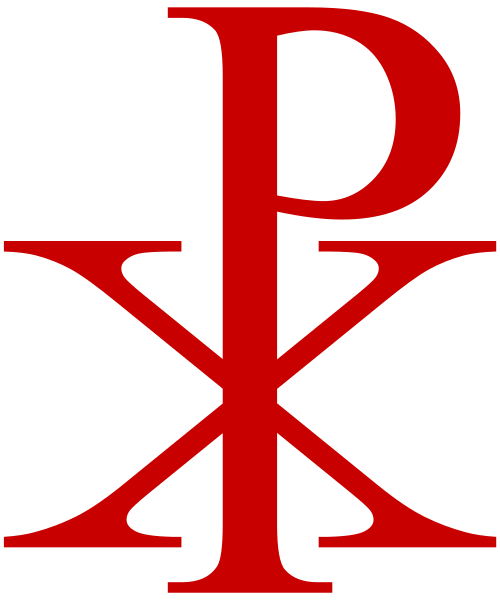
I immediately came to mind another famous ancient Christian symbol: the Labarum of Constantine.


The Labarum is a wonderful symbol, not only for their meaning but for his legacy. I would say that is the symbol that changed history. In 312 AD, Constantine, one of the greatest Roman emperors fought in the battle to another Emperor Maxentius, to end the tetrarquía and seize power in the territories of the West.

According to legend, one day before the battle, Constantine had a dream. In the dream, saw the sky was a symbol, the Chi-Rho that after the battle was known as Labarum, now here's why. In the dream, Contantino also heard a voice saying in Greek "Εν Τούτῳ Νίκα" in Latin "In Hoc Signo Vinces" which means, "With this sign conquer" Constantine was not clear the message, but another voice some authors say it was the same as Christ told you should use the sign against his enemies. Constantine replaced all banners with the Chi-Rho, which is why he is known as the Labarum of Constantine. The next day, October 28, Constantine defeated Maxentius at the Battle of Milvian Bridge on the Tiber in Rome. Many Christian authors of that era and later, attributed the victory of Constantine to God.

So much for the legend, but the significance of Labarum had only begun after the battle. Clearly, his vision and the use of the Labarum to defeat their enemies influenced the faith of the Emperor as a year later, Constantine signed the Edict of Milan, "legalizing" the practice so Christianity in the Roman Empire. Years later, Constantine himself was baptized in order to become the first Christian Emperor. All this gave way to the spread of Christianity throughout Europe.

Finally, make it clear that in one version, the symbol that Constantine saw was the cross. But sources point towards the Labarum, which leads to the second conclusion, the Chi-Rho (Greek initials of the word Christos ("Χριστός")) was not intended to represent Christ at the time, as you might think due to initial Labarum. This is because there is no registo of Labarum before Constantine, which fits perfectly with the fact that the symbol first appeared publicly was in 315 AD, engraved on a gold coin of the Constantinian era, which means that Constantine began to use it at the time and after the battle, so which we infer that the symbol had an important meaning for the Emperor was the Labarum and not the cross.

With or without divine help, seen, dreamed or invented, Labarum will always be related to the Emperor Constantine and his acts gave the story the way that now bears.