Thursday, December 31, 2009

Normal Muscle Percentage Women

Happy New Year! Time Commanders

This blog wishes everyone a Happy New Year!


As curious data and not lose the habit and the sense of the blog, did you know what to XVI century New Year's Day was March 25?. 1582 became the 1st of January. Before I had also been on 1 March and 25 December.

And regarding New Year's celebration, is that in the Roman Empire, by way of good wishes for the coming year the Roman citizens were exchanged trimmed laurel fig and olive branches, or other tokens of greater value. Quite dependent on the economic possibilities of each. The Romans did not lose the opportunity, as we do.

Congratulations!

Saturday, November 14, 2009

Balck Spects In Urine


For someone like me who give so much to travel to past and take command of an army in battle, Time Commanders is a dream come true because it is what comes closest to it.


The series was launched in 2003 but I found until a few weeks ago and I've seen every single episode. Using the Rome: Total War, the creators of the series built a modern command center to recreate historical battles of the ancient world. Each program

play a different battle and invite 4 people, usually working groups or friends who are not familiar with video games - so you do not have a clear advantage - and 2 of them assigned to general to lead the battle and other 2 captains / lieutenants to execute the warrants.

Usually, none of the participants have the slightest idea about history or military strategy, which makes it very interesting because God commanding his troops as they suggest and often make many mistakes that cost them the battle, but fun to see the interaction between players.

It's great to see a thug General giving orders to his lieutenants, focusing on small parts of the battle and trapped in the micromanagement of the same while on the other side of the battlefield his troops are being wiped out and no one notices. Sometimes, the generals left to his lieutenants with little to do but obey commands like "move left", "back", "hold the line", "outflank", etc ... The battles usually turn into utter chaos! If it gets hot, the players start arguing with each other during battle, or simply ignore the failed lieutenants orders and fight their own battle as best as possible.

Communication is vital but sometimes it is very difficult because they are large scale battles and is very difficult to keep track of everything. Especially since most players often are not familiar with military terms and unit names as "cataphracts" or "Falange" so I simply refer to them as "horses" or "the spear" and that confuses a lot of his lieutenants, who commonly make the mistake of running different orders to which the generals were given. These

chaotic scenes are what makes the series so fun to watch lifelong friendships tested. That does not mean that the battles are not really good. One of the best battles I saw was the Battle of Gaugamela, where a team of friends for life took control of the army of Alexander the Great. They played pretty well and won a decisive victory, although there was a catch: Alexander the Great, who as always commanded his army from the front, died in battle!

Unfortunately the series is now discontinued, but made two great seasons, which can be found on YouTube, the battles are recreated as follows: First season


  1. Trebia Battle Battle of Watling Street Battle Bibracte
  2. Graupius Battle of Mons Battle of Tigranocerta
  3. Battle of Pharsalia
  4. Battle of Cannae Battle of Raphia
  5. Battle of Kadesh
  6. Battle of Leuctra Battle of Adrianople Battle of Telamon
  7. Battle of Gaugamela Battle of Chalons
  8. Battle of Marathon Battle of the River
  9. Silario


Season
  1. Teutoburg Forest Battle
  2. Battle of Stamford Bridge Battle Hydaspes
  3. Cynoscephalae Battle Battle Battle of Dara
  4. Troy
  5. Battle of Hastings Battle of Sarmisegetusa

The program was also attended by two experts in military history, usually Dr. Aryeh Nusbacher of the Royal Military Academy Sandhurst and Dr. Adrian Goldsworth, a prolific historian and author of the University of Oxford. Both experts will give players a small review of the battle that will fight as well as information on both armies concentrating on the weaknesses and strengths of both. Afterwards retire to the top of the command center from which to watch the final battle to take his criticism and show the team and the audience as the events that really happened.

command center with large screens with aerial views of the battle as well as a general strategic map for where they can see the full-scale battle. Still, the players suffer when planning and implementing their strategies, just imagine how it would be in a real battle, where communication is almost nonexistent and the general can only see what happens in the battle zone in which it is, it's really worth admiring generals of the ancient world.

Time Commanders is undoubtedly one of my favorite shows would have been my dream come true to attend one of their programs. Unfortunately it was not be possible so I'll have to settle for my own army to command against other humans online and in the comfort of my home. I recommend watching the videos, learn a lot and if they like the story, have fun a good time.

Tuesday, October 27, 2009

How Does An Analogue Watch Know What Year It Is

Thanks! Training

Today this blog reached 50,000 hits, I am proud that so many personas me lean. Esto es realmente alentador y por supuesto que seguiré escribiendo como si no hubiera mañana.

En verdad les agradezco enormemente sus visitas y sus comentarios. Para esta ocasión especial, les comparto la "Victoria Alada de Samotracia", una magnífica escultura hecha en Grecia en el siglo II o III a.C. y que hoy pueden admirar en la escalinata principal del Louvre, en París, Francia. Me parece que va muy acorde con este gran logro. Saludos y ¡MUCHAS GRACIAS!

Tuesday, October 20, 2009

Ingrown Hair On Piles

Delta / Wedge

Sabiendo que soy un apasionado y conocedor de la historia militar, un amigo se acercó con toda la confianza y me comentó que de todas las formaciones has seen, he likes is the famous Delta formation, also known as the Wedge.

however, said that although he liked, was not a real practical use to use in battle. With all the world like I took the time to explain everything to him from his doubts and now I'll share with you.

First, the formation name "Delta" comes precisely from the shaping of the unit and get that name in reference to the Greek letter "Delta" (Δ) which is basically a triangle, here are some pictures of Alexander the Great Partners in training and "Delta"


Training "Wedge" is basically the same but on a large scale, ie several units that are just a line in a "W":


That is in terms of training, now let's turn to use. The essence of this training is going into battle in front and making use of its triangular shape, a wedge between the enemy line and IRLA getting bigger and expands as it moves backward, which is where the wider training:


Delta has several training obvious advantages and disadvantages. As for the advantages, the form in a triangular manner, the unit has a strength and shock load much higher as opposed to square or rectangle formation in the depth of which is usually 4 to 6 lines, DEPTH Delta formation at several tens of lines, each with a momentum of its own load. At the same time, this becomes a disadvantage when they go into combat and open the gap in the enemy line, they will be attacked by both sides, leaving it very vulnerable. Second, since the end of training there is only one man behind the two, then three and so on, can that if are facing heavy infantry or very well protected, may not reach to infiltrate enemy lines to open the gap and then most likely be slaughtered as they try to enter the line.

Apparently, the formation has more disadvantages than advantages, but this is where creativity comes, which is the skill that differentiates the military genius of others. In the above description, training Delta faced a compact unit and tried to break through the line through the impact force, using its triangular shape, but what if instead of launching into a compact front is launched on a gap and made, for how small?:


What happens is that it disappears completely the possibility that the tip of the training does not reach to penetrate, since you only need a gap of about 3m. for the first 3 lines to infiltrate an the gap and as they come forward, the rear lines - wider - will be responsible for opening the gap without any problem:


As you see in the picture above, the Partners in Delta formation crossed enemy lines using the small gap separating the two enemy units, and not only that, but clearly left a gap 5 times larger than the original, so finally we will see how to take that gap:


As you see in the image, the Macedonian Companions reopened the gap between the two enemy units, but this time, are supported by Hispaspistas , very effective lancers who are exploiting the gap left by the cavalry to attack the flanks of each of the units in the middle. If you look carefully at the image, the Persian troops (green) outnumber the Hispaspistas, so if you execute the maneuver to attack the gap left by the cavalry, they could easily encircle and cut off a Macedonian infantry, but is just this moment when comes the highlight of this strategy: the hammer. As you see in the image, red arrow pointed to a motion that the cavalry will follow immediately after passing through the gap. The Fellows will be reformed into a rectangle and Persian infantry attack from the rear while Hispaspistas do the front, at which point, the Persians are lost:


As you see in the image, Persians were victims of the famous "hammer and anvil" tactic used in the military history and was put to maximum use by Alexander the Great, is so effective that among the greatest generals of history, Alexander was the only one who died undefeated in battle.

In conclusion, the Delta training is very risky and requires clean and precise maneuvering to run well, but if done correctly, imaparable.


Thursday, September 24, 2009

Free Birthday Cards Of Richmond Tigers

The Volley

Like dozens of historians and archaeologists, I am passionate about the topic of the tomb of Alexander the Great, where is buried relic like half the world has looked for 2,000 years?. Unfortunately at this time of my life I have neither the time nor the equipment nor the resources to embark on the quest for Alexander.

But while, so if I can be doing is collecting all the information possible on the subject and is just what I have at least a year doing. Among so much information I collected and read, I have met several times with the famous Nemeseión, so I decided to dedicate a post.

The Nemeseión is the name that is known to the temple of Nemesis and Julius Caesar (as Appian) built there to bury the decapitated head of his enemy and friend Pompey and is supposedly built on the exact spot where Pompey was killed.

The Nemeseión is quoted in several of the works that I mentioned because I have collected all the historical accounts we have suggest that Alexander's tomb is in Alexandria., Place where Pompey was murdered on the orders of King Ptolemy XIII. Therefore, dozens of archaeological works were carried out in cemeteries and temples of the city. Of the places that have been found, the most important is perhaps the alabaster tomb when it was discovered in 1907 by Italian archaeologist Evaristo Breccia, thought he had found the Nemeseión, but one of his compatriots, Achille Adriani, took it out of his error.

And indeed, Breccia was wrong. Alabaster Tomb could not be the Nemeseión since it was destroyed during the Jewish-Roman War, between 115 and 117 AD when luku, the leader of the rebellious Jews, entered in Alexandria after the Romans abandoned and burned the whole city.

One of the most common confusion is that which says that the head was buried in Pompey's Pillar, which stands in what remains of Sarapeión. This speculation arose in ancient times when travelers began to speculate on the tomb of Pompey and Pompey's Column assigned as the place where Caesar had buried his head. This idea continued until the Middle Ages when the Crusaders visited the column with the same purpose, but the reality is that this column was built to commemorate the victory of Publius on the rebellion of Achilles, who proclaimed himself Emperor of Egypt during the reign of Diocletian. Therefore, Caesar never saw the Column of Pompey since it was erected three and half centuries after his death in 291 aD


I have not found any description of how was the Nemeseión I searched a bit more about it but sources are scarce mention it so I'm afraid I can not give any picture. What I found was a beautiful poem dedicated to Pompey and Nemeseión, are fluent in English, here is the link:

http://sannion.livejournal.com/tag/nemesis

In conclusion, the Nemeseión was destroyed during the assault of Alexandria, but it would certainly be an invaluable relic if it still existed today. The war took that piece of history, but we are looking for an even bigger and I am confident that we will find: the tomb of Alexander the Great.

Sunday, September 13, 2009

Nadine Jansen move

Stack Nemeseión

Today I came across this image while surfing Google. It is one of the best examples of a Roman battle at the front I've seen, watch it for yourselves:


The author of this image is Mariusz Kozik, a Polish artist, which I took the liberty of contact because for doubt about who the Legionaries in the drawing. It is more or less than the Legio X Gemina of Julius Caesar, his best men who are facing during the season the Celts of Gaul. We know this specialized clothing for the cold, which had never before been used in this way for the legions had never been north of the Alps for a long time. Second, the helmet is used Montefortino type, the same as using the pre-Marian legion but was not replaced by iron and bronze until after s. I aD where the infrastructure allows for mass produce. All this tells Julius Caesar himself in his famous journal / book "Comments of the Gallic Wars."

volley The battery is impressive to me every day more convinced that the pilum was perhaps the key to success in the battle of the Roman Legions.

Monday, August 17, 2009

Turbo Oil 2380 Can It Be Used In Cars


Well, enough about religion, Catholics and the Church. It's time to talk about my passion, Military History.

The other day I was watching a video on YouTube about the Battle of Leuctra. I was fascinated with the AmB of Epaminondas, the Falange oblique. Is one of those battles in which the genius of the general still leaves you as an enemy. I can not imagine the face of Cleombrotus I (king of Sparta) to maneuver Epaminondas (Theban general).

La Falange and remember, battle online, forming a wall of peaks that is lethal to attacking from the front:


The Greek phalanx, including the Theban fought in a formation of about 800 men long and 8 background, a very long line. The fighting in Macedonia in turn called Syntagma square smaller, 16x16.

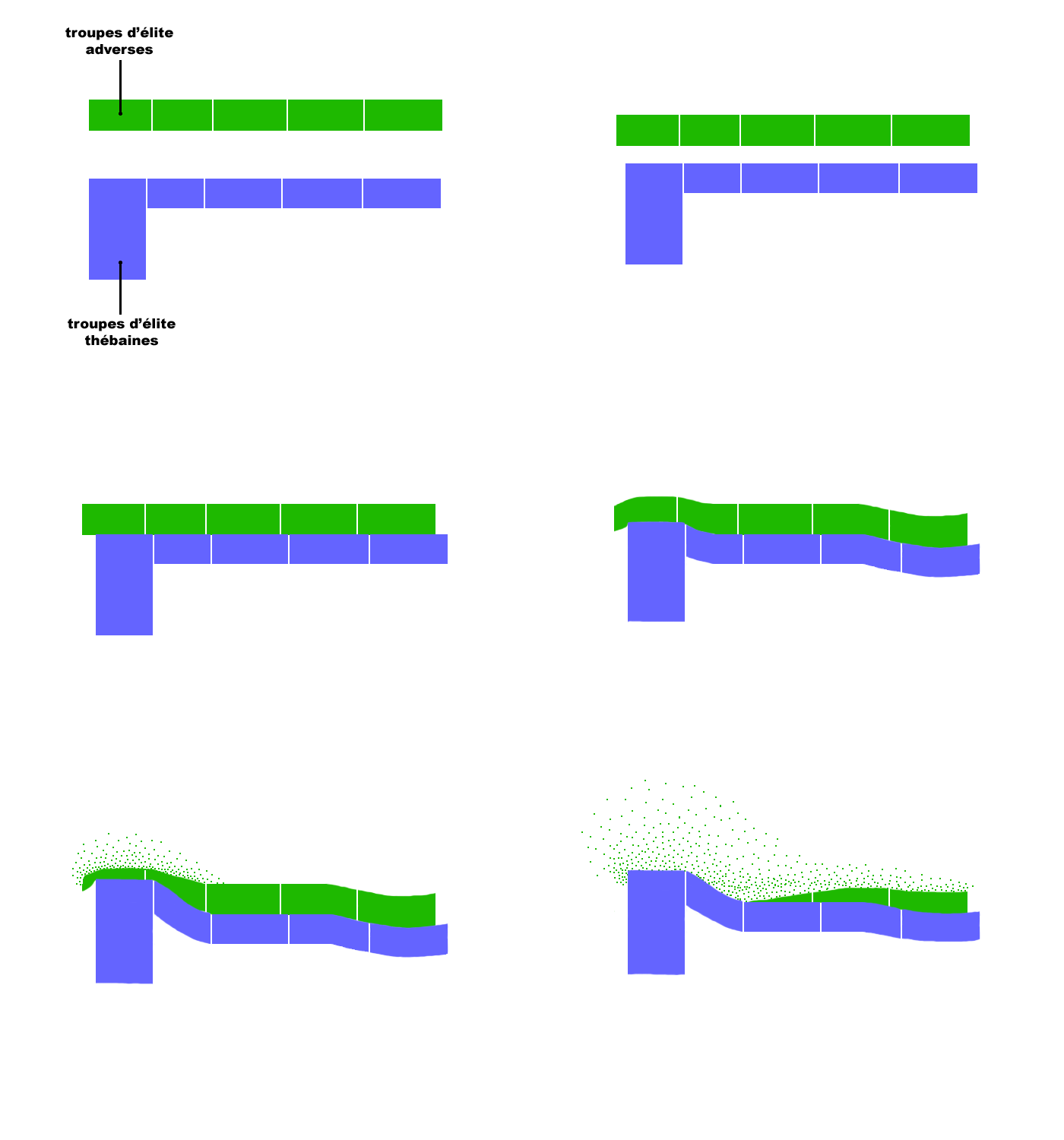
In the Battle of Leuctra, Epaminondas faced a Spartan army composed of Greek mercenaries and cavalry mostly Greek, but the real threat was its Spartan, Spartan elite soldiers who were feared by all because of his rigorous training from small and their oath to fight to the death.

In antiquity, armies tended to be formed so that on the right flank were placed the best troops, the elite soldiers in another post I will explain why. As expected, Cleombrotus formed his phalanx in the center and left and his Spartans on the right flank. But as always, the difference between good and genius is creativity.

Epaminondas broke the rule and placed on his left flank to his best men, his 300 hoplites, joined by more than the cause of war and who formed the Theban Sacred Band, and I'll talk about them in another post. But Epaminondas did not leave nothing to chance, because not only formed his best men on the opposite side than usual, but reinforced its line exaggerated. Of the 8 men of substance that usually had the phalanx, Epaminondas made it 50 rows deep. It was like an old army tank advancing rampage. Fifty men pressing forward with spikes that crossed shields and flesh alike. As if that was not enough already, Epaminondas, knowing that his center and right were weak due to the strengthening of the left wing, used another grand strategy, the famous training Echelon, which is that the units are formed in diagonal, one after another either to the right (as did Epaminondas) or left. Then we have a block of spades unstoppable progress towards the Spartan left flank, while the rest of the phalanx moves diagonally putting even more pressure on the sidewall, 400 Spartan breathed his last breath that day, incubated Cleombrotus himself.

After Leuctra, Epaminondas and oblique phalanx took to the pages of history, a true work of genius. See it for yourself, and simplified and if you can, watch videos and read about the battle, it's wonderful:

Monday, July 13, 2009

Can You Take Apo-cephalex With Tylenol

Oblique La Falange "Idolatry? Index

This Saturday I went with my lifelong friends at a nightclub in southern Mexico City. At about 2 am, when I was starting to go the people, not a friend remember why I bring up the images in religious worship.

remember very upset he told me verbatim: "I emputa is that if Jesus Christ was the one who gave his life for us, idolize the Virgin Mary, you should read only the Father." Clearly my friend is not Catholic, says he is a Christian but said everything I could call most Protestant Christians and with good reason.

Anyway, started claiming that we Catholics idolize the Virgin and the Saints and that it is a sin according to the second commandment. Calmly in the world gave several answers. First I said that officially, Catholicism does not encourage idolatry, but did not deny that there were people who if they did, mainly because of ignorance. Secondly I said that I should not confuse the terms, it is easy to see someone praying to the Holy Virgin to say that it is idolatry, we must distinguish between idolatry, worship and veneration. Finally I told him just to make this distinction, the Church has divided worship at 5:
    Latria
  • absolute: It is the worship given to God alone, Father, Son and Holy Spirit.
  • Latria on: The worship given to images or relics of God (Father, Son, Holy Spirit, Holy Trinity and Species of the Eucharist)
  • hyperdulia: The cult of the Blessed Virgin Mary. Dulia
  • absolute: the cult is reserved for the angels and saints.
  • dulia on: The worship of images and relics of saints.
After I explained each one, which obviously my friend did not Conci, said in conclusion, the cult of the Virgin must be made to show respect to the great woman who was chaste, pure, virgin wise, strong, holy, etc ... clear after putting God, to fulfill the first commandment and not violate the second. And then he, revealing a secret of hers said, "I also I am a virgin, chaste and pure, is, well, the Bible says Jesus had brothers, how can he be a virgin then? ". Typical Protestant against Catholic critics.

First I said no he could think of comparable with the Virgin Mary just by being a virgin, "chaste" and "pure" he said. Secondly told him he was completely ignorant to think that what the Bible says in the chapter where he makes reference to the brothers of Jesus, literal. I told him that the Bible was not written in English, and was written yesterday. For starters, no Bible or anywhere else will you find that says, "Children of Mary" always refers to one, Jesus Christ . It seems that we are facing a contradiction within the Bible itself, but then I said, the Bible was written thousands of years and originally in Greek, Hebrew and Aramaic. The word brother in Hebrew, had no meaning in English. "Brother" in Hebrew means "cousin" or "nephew", ergo, the Bible refers to Jesus 4 cousins, not brothers!

During our discussion we address many topics and others. Obviously I could defend my faith with his accusations of "cafeteria", the only thing is I was curious as youth itself is intrudes questions formerly reserved for adults and authorities on the subject, but above all, rare was to take place in a cave in southern Mexico City at 2 am with the sound turned up and the alcohol flowing through the veins of those who accompanied us, no doubt that life is full of surprises .

Sunday, June 14, 2009

How To Catch Hoho In Shiny Gold

Librorum Prohibitorum

a day like today but in 1966 the Catholic Church opened the door to knowledge for 400 years had remained closed. On June 14, 1966 the famous "Index of Forbidden Books" was not renewed and was officially abolished.

This index contains a list of names of authors and works considered dangerous to the faith. It was created in 1559 by the Inquisition. The list of names is very large but it contains great thinkers and scientists as

  • Descartes La Fontaine
  • Montesquieu
  • Copernicus Kepler
  • Balzac Zola
  • Pascal Victor Hugo Spinoza
  • Hume Kant Beccaria
  • Berkeley
  • Condorcet
  • Bentham
  • Hobbes
  • Diderot, etc ...
Interestingly, names such as Schopenhauer, Marx and Nietzsche are not included in the Index because their readings were prohibited ipso facto recognized because of their atheism and hostility toward the Catholic Church. The Index contains more good authors and works that can not easily be doubted.

All names listed above sound very familiar since at least the new generations, we have studied them all. And that seems so normal today, 40 years ago was not. Catholic or not, we must accept that the Catholic Church has made mistakes for which even apologized. The Index is one of them and today we have access to all these authors and their works without fear of "sin."

Friday, June 5, 2009

Gay Cruise Spot Indiana

"In Hoc Signo Vinces" Star of Vergina

Yesterday evening was as usual with my friends having a good time. When I got to the kitchen to get noticed by a glass one of my friends had tattooed the initials ΙΧΘΥΣ lower back. As you may recall one of my previous posts means "Jesus Christ Son of God Saviour" and was probably the most famous Christian symbol of the cross clear.

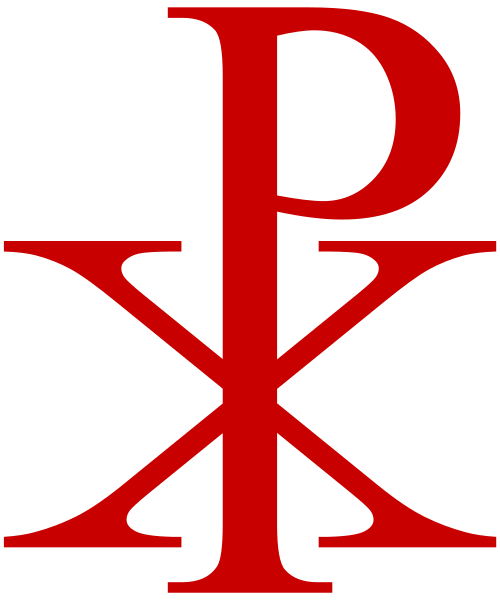
I immediately came to mind another famous ancient Christian symbol: the Labarum of Constantine.


The Labarum is a wonderful symbol, not only for their meaning but for his legacy. I would say that is the symbol that changed history. In 312 AD, Constantine, one of the greatest Roman emperors fought in the battle to another Emperor Maxentius, to end the tetrarquía and seize power in the territories of the West.

According to legend, one day before the battle, Constantine had a dream. In the dream, saw the sky was a symbol, the Chi-Rho that after the battle was known as Labarum, now here's why. In the dream, Contantino also heard a voice saying in Greek "Εν Τούτῳ Νίκα" in Latin "In Hoc Signo Vinces" which means, "With this sign conquer" Constantine was not clear the message, but another voice some authors say it was the same as Christ told you should use the sign against his enemies. Constantine replaced all banners with the Chi-Rho, which is why he is known as the Labarum of Constantine. The next day, October 28, Constantine defeated Maxentius at the Battle of Milvian Bridge on the Tiber in Rome. Many Christian authors of that era and later, attributed the victory of Constantine to God.

So much for the legend, but the significance of Labarum had only begun after the battle. Clearly, his vision and the use of the Labarum to defeat their enemies influenced the faith of the Emperor as a year later, Constantine signed the Edict of Milan, "legalizing" the practice so Christianity in the Roman Empire. Years later, Constantine himself was baptized in order to become the first Christian Emperor. All this gave way to the spread of Christianity throughout Europe.

Finally, make it clear that in one version, the symbol that Constantine saw was the cross. But sources point towards the Labarum, which leads to the second conclusion, the Chi-Rho (Greek initials of the word Christos ("Χριστός")) was not intended to represent Christ at the time, as you might think due to initial Labarum. This is because there is no registo of Labarum before Constantine, which fits perfectly with the fact that the symbol first appeared publicly was in 315 AD, engraved on a gold coin of the Constantinian era, which means that Constantine began to use it at the time and after the battle, so which we infer that the symbol had an important meaning for the Emperor was the Labarum and not the cross.

With or without divine help, seen, dreamed or invented, Labarum will always be related to the Emperor Constantine and his acts gave the story the way that now bears.

Tuesday, May 26, 2009

Why Do Plastics Stretch?


In my 19 years I am a very studious young, athletic, responsible, free from the vices of alcohol, snuff, sex and drugs. Wow! to what to give for someone in this life. Anyway, when I told my friends I wanted to tattoo, just mad, they could not conceive how someone with my personality as "right and proper" could think of tattooing. It was then when I explain that one of the few things I really learned the American culture is the meaning of tattoos. Unfortunately

consider them here in Mexico for "Naco" and synonymous with vandalism or something. Among girls is acceptable so long as you look good and take it into a "sexy." Anyway, I explained that a tattoo is not destruction but passion. Your body is tattooed with an image that led to the death, which requires that the image is highly significant and representative of you.

My Maryland teammates have Tadu their names, their nicknames, the name of your city and your country, the name of someone close in your memory, etc ... that's why I'm seriously considering this tattoo: the Star of Vergina.


For years, archaeologists found in handmade pieces, paintings and walls throughout Greece. The related simply as a religious symbol representing perhaps the Greek Pantheon and the 4 elements of matter, hence its 16 rays.

But in 1977, Manolis Andronikos unearthed a chest during an excavation at Vergina, in the Tomb of the Kings located in the territory of the ancient Kingdom of Macedonia.

The chest was identified as the tomb of Philip II of Macedon, father of Alexander the Great. Since then, the star has been linked with the Kingdom of Macedonia, creator of one of the greatest empires of antiquity.

Just as the acronym SPQR represent the power of Rome, the Star of Vergina is the power to both Macedonia and Alexander. By this time, know my passion for the history of the great conqueror, in the personal history that makes me challenge myself every day to get closer, if not equal greatness. With this symbol on my back, I will never forget that excel in everything, be the best, do what everyone considered impossible, to reach the top, be unique and leave a legacy.

not let me forget my age, the Great and was the best commander of cavalry in the world. And I always will remember that at age 30, he had already won 3 / 4 of the known world. Are difficult to emulate feats let alone overcome. Today of course I can not emulate these feats literally, but you have to point out is the same greatness that they brought him to Alexander. So the question whose answer never leaves me satisfied and every day help me beat it, what I've done?. Every time I make it, is that I am an abyss of distance ... much to do and so little time, I'm outta here!

Sunday, May 24, 2009

Design Your Own Bmx Bike

Angels & Demons

I hate having so much abandoned this blog that people read and write that I like. My coach tells me that I should never apologize, but just fix my mistake and is precisely what will.

In all my previous posts I wrote about Alexander the Great Alexander. However, in the U.S. since I do not have the right software to do more battles like I did (Chaeronea), I had to suspend the posts until I return to my home. In addition, his biography is extremely long and I understand that my readers get bored just reading about Alexander and more if you do not share the passion I have for their history.


Finally, progress on my blog. Today I went to see the controversial film "Angels & Demons." Like the "DaVinci Code" and all the other movies based on historical fact, partially or totally, because I like history is my passion and the cinema is the perfect way to revive this lost world for centuries.

If you've read some of my posts, despite a taste for these films, I've been quite upset by the modified content of some of them as "300" or "The Code DaVinci, "but to my surprise" Angels & Demons "is excellent. Even when you follow the same line of" The DaVinci Code, "with plots and mysteries surrounding the Catholic Church, Angels & Demons" divide and well defined facts and fiction unlike "The DaVinci Code" where both mixed and resulted in altered very convincing story for the ignorant on the subject. In watching the film, you immediately realize that is completely fictional, as opposed to "The DaVinci Code" which moved them to some serious faith.

As expected, the story once again contains symbols, codes, secret societies, plots, conspiracies and much mystery, something that appeals to the masses like magnets. The big difference with "The DaVinci Code" is the theme here is a REAL problem, not a manipulation of the facts. The eternal conflict between science and religion, these angels and demons have been beaten in battle for centuries and have caused much harm. Personally, I am in favor of science but I never abandoned my faith, although I realize that not practical as it should, my teachers call me Prepa UP "cafeteria Christian" as really look forward to the day when science God can explain the existence of God, that sounds contradictory.

I'm no fan of Dan Brown, but I must admit that Robert Langdon's character is incredibly attractive in the sense that their knowledge is so great that it gives you the power to change history and save the Church. That's a real character, he should imitate and look instead of wasting time reading vampiritos mind and do tricks.

not talk about the content of the film, did not want to ruin the trip to the movies to anyone. The only thing I left a bad taste in my mouth was the outcome of the story, it seemed very sudden and surprising though, is totally discordant with the rest of the plot. Despite this truth, I was extremely happy with the room and I saw a very interesting plot surrounded by history, art and symbolism ... just wonderful!

Friday, April 3, 2009

Eyes Too Close Together

Following the Steps of Alexander the Great - The Rise of Greece

Now that the Prince of Macedonia had become king, the problems started immediately. The cops that the great Philip II had subjugated, Alexander saw an opportunity to regain their independence, notably Athens and Thebes, the same cops that Philip and Alexander was defeated in the Battle of Chaeronea. Alexander

immediately mobilized against Thebes, who surrendered immediately as soon as Alexander came to his door. All entender the message, and the rest of the Greek polis, with the exception of Sparta came together at the Isthmus of Corinth, where Alexander was named General in Chief of the Greeks against Persia.

Apparently, Alex had finally managed to unite all Greeks under his banner. Darius III was fully aware of this and immediately charge thousands of sacks of gold coins to buy as many Greeks as could to keep from joining Alexander in his campaign against Persia.

The following year, in 335 BC, Alexander fought the Thracians and the Illyrians in the north with the objective of ensuring the famous River Danube as the northern border of the Kingdom of Macedonia. Both opponents opposed him, but Alexander was just another day at the office.

While his successful campaign in the north bore fruit in the south, Thebes and Athens were revealed after more. It was the third time I had to deal with them at this time decided to end them forever. Alexander marched against Thebes in front of 33,000 people and completely razed the city, reduced it to rubble. He sold all of its inhabitants as slaves and only spared the priests.


After such killing, Athens surrendered immediately. These were the drastic measures that had to take Alexander to pacify the Greek polis. Incredibly, it only took 2 years to do it. Alexander returned to Macedonia, and without fear of more riots and finally began to prepare to march towards Persia, his war of vengeance was about to begin.

Friday, March 27, 2009

Piano Sheet Music For Mountains By Biffy Clyro

Following the footsteps of Alexander the Great -

After the Battle of Chaeronea, Philip Alexander and his father left him clear to the rest of the Greeks and the world that the time had come. The peak of the Golden Age of Greece was about to begin.

But the tragedy found the young Macedonian. At 19-20 years, in 336 BC his father, Philip II, King of Macedonia was assassinated during the wedding of his daughter Cleopatra. There are several theories about his murder. Revisémolas quickly:

  1. Greeks: Due to the conquests of Philip on the Greek polis, it was logical to think that if they got rid of it, they might recover their freedom and independence.
  2. Persians: The reasons are obvious. A kingdom is growing and expanding and has subjugated all of Greece was an imminent threat and more when he was a Persian ruler as incompetent as it was Darius III.
  3. Olympia: The wife of Philip Handler gives more than enough reasons to blame. We know that Olympia idolized her son Alexander, considered him a demigod, son of Zeus himself. We know that Philip was a womanizer who had 7 wives, and of course, Olympia would not allow his beloved son saw his throne threatened by another child that Philip had with one of his many wives.
  4. Alexander: The reason is logical. Be the sole and rightful heir to the throne, his ambition for the post it could have led to murder his own father. Analyzing

the 4 theories, in my humble and personal opinion, I choose to blame for the murder Olimpia Philippi. Even when the 4 sound logical, the chances of the other 3 are under the circumstances of the moment.

So his real test had come. At 20, Alexander became the new King of Macedonia.

Friday, January 2, 2009

Kates Playground December 2009 Set

heir to the throne after Alexander's Footsteps - The Battle of Chaeronea

As I mentioned in my last post, Chaeronea was the first battle of Alexander, his moment had arrived.

At 18 years the young Macedonian took command of 1800 Fellows (Heavy Cavalry). For this series of posts, I will use game technology to recreate the battles, the software is called Rome: Total War - Alexander. The original provision was:


not very well appreciated, perhaps, but basically the formation Macedonia was Alexander and his Companions on the left flank, the Falange in the center and right Philip with his cavalry. By the Greeks, the Greek phalanx was formed on the left flank and center, while the famous Theban Sacred Band, which lost 254 of its 300 men, was formed on the right to Alejandro address.

The development of the battle was as follows:


An error in the progress of the Greeks left a gaping hole through which Alexander came to surround the Theban phalanx. To illustrate this better, I took the time to recreate the battle in the simulator that I talked about, can see it here or follow the link to YouTube where you can see it in "High Quality", which I recommend because it is much better appreciated.


I appreciate your comments because I took enough to make this material. Greetings.