Well, enough about religion, Catholics and the Church. It's time to talk about my passion, Military History.
The other day I was watching a video on YouTube about the Battle of Leuctra. I was fascinated with the AmB of Epaminondas, the Falange oblique. Is one of those battles in which the genius of the general still leaves you as an enemy. I can not imagine the face of Cleombrotus I (king of Sparta) to maneuver Epaminondas (Theban general).
La Falange and remember, battle online, forming a wall of peaks that is lethal to attacking from the front:

The Greek phalanx, including the Theban fought in a formation of about 800 men long and 8 background, a very long line. The fighting in Macedonia in turn called Syntagma square smaller, 16x16.
In the Battle of Leuctra, Epaminondas faced a Spartan army composed of Greek mercenaries and cavalry mostly Greek, but the real threat was its Spartan, Spartan elite soldiers who were feared by all because of his rigorous training from small and their oath to fight to the death.
In antiquity, armies tended to be formed so that on the right flank were placed the best troops, the elite soldiers in another post I will explain why. As expected, Cleombrotus formed his phalanx in the center and left and his Spartans on the right flank. But as always, the difference between good and genius is creativity.
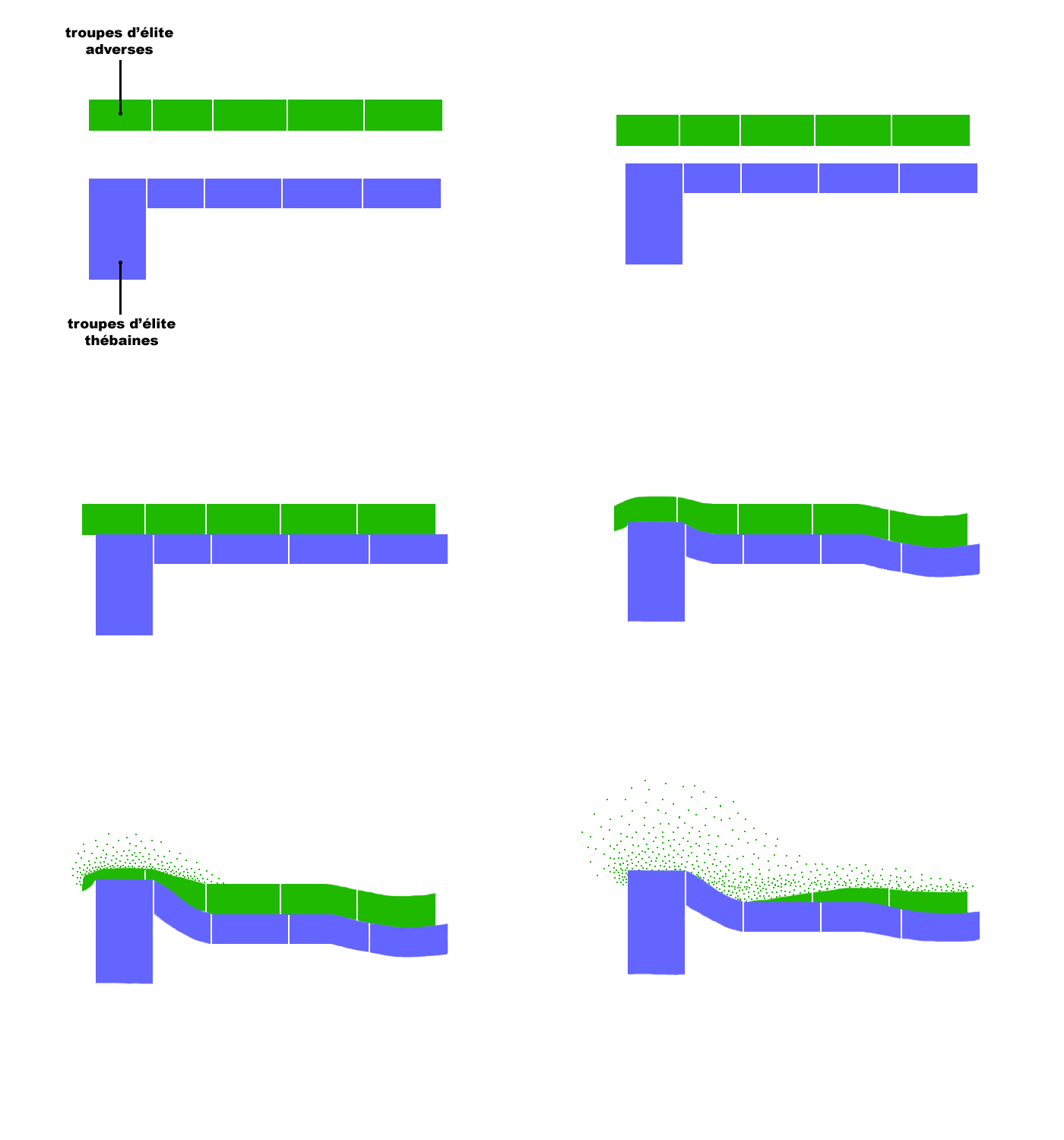
Epaminondas broke the rule and placed on his left flank to his best men, his 300 hoplites, joined by more than the cause of war and who formed the Theban Sacred Band, and I'll talk about them in another post. But Epaminondas did not leave nothing to chance, because not only formed his best men on the opposite side than usual, but reinforced its line exaggerated. Of the 8 men of substance that usually had the phalanx, Epaminondas made it 50 rows deep. It was like an old army tank advancing rampage. Fifty men pressing forward with spikes that crossed shields and flesh alike. As if that was not enough already, Epaminondas, knowing that his center and right were weak due to the strengthening of the left wing, used another grand strategy, the famous training Echelon, which is that the units are formed in diagonal, one after another either to the right (as did Epaminondas) or left. Then we have a block of spades unstoppable progress towards the Spartan left flank, while the rest of the phalanx moves diagonally putting even more pressure on the sidewall, 400 Spartan breathed his last breath that day, incubated Cleombrotus himself.
After Leuctra, Epaminondas and oblique phalanx took to the pages of history, a true work of genius. See it for yourself, and simplified and if you can, watch videos and read about the battle, it's wonderful:

The other day I was watching a video on YouTube about the Battle of Leuctra. I was fascinated with the AmB of Epaminondas, the Falange oblique. Is one of those battles in which the genius of the general still leaves you as an enemy. I can not imagine the face of Cleombrotus I (king of Sparta) to maneuver Epaminondas (Theban general).
La Falange and remember, battle online, forming a wall of peaks that is lethal to attacking from the front:

The Greek phalanx, including the Theban fought in a formation of about 800 men long and 8 background, a very long line. The fighting in Macedonia in turn called Syntagma square smaller, 16x16.
In the Battle of Leuctra, Epaminondas faced a Spartan army composed of Greek mercenaries and cavalry mostly Greek, but the real threat was its Spartan, Spartan elite soldiers who were feared by all because of his rigorous training from small and their oath to fight to the death.
In antiquity, armies tended to be formed so that on the right flank were placed the best troops, the elite soldiers in another post I will explain why. As expected, Cleombrotus formed his phalanx in the center and left and his Spartans on the right flank. But as always, the difference between good and genius is creativity.
Epaminondas broke the rule and placed on his left flank to his best men, his 300 hoplites, joined by more than the cause of war and who formed the Theban Sacred Band, and I'll talk about them in another post. But Epaminondas did not leave nothing to chance, because not only formed his best men on the opposite side than usual, but reinforced its line exaggerated. Of the 8 men of substance that usually had the phalanx, Epaminondas made it 50 rows deep. It was like an old army tank advancing rampage. Fifty men pressing forward with spikes that crossed shields and flesh alike. As if that was not enough already, Epaminondas, knowing that his center and right were weak due to the strengthening of the left wing, used another grand strategy, the famous training Echelon, which is that the units are formed in diagonal, one after another either to the right (as did Epaminondas) or left. Then we have a block of spades unstoppable progress towards the Spartan left flank, while the rest of the phalanx moves diagonally putting even more pressure on the sidewall, 400 Spartan breathed his last breath that day, incubated Cleombrotus himself.
After Leuctra, Epaminondas and oblique phalanx took to the pages of history, a true work of genius. See it for yourself, and simplified and if you can, watch videos and read about the battle, it's wonderful:


0 comments:
Post a Comment